
Searching for the right number of calories per day to lose weight can lead you down a frustrating path of conflicting answers. Is it 1,200? 2,000? 2,500? The sheer range of numbers is enough to make anyone feel overwhelmed and unsure of where to begin.
Here’s the truth you need to know: there is no single magic number. Your ideal calorie intake for weight loss is as unique as your fingerprint, shaped by your age, sex, height, current weight, activity level, and metabolic health.
Despite this personalization, the fundamental rule of weight loss is simple: you must create a calorie deficit. This means consistently consuming fewer calories than your body burns. This article is your data-driven guide to cutting through the confusion. We will provide you with the evidence-based formulas, practical strategies, and crucial context to confidently determine a safe and effective daily calorie target for your weight loss journey.
How Many Calories Should You Eat on Average?
WThe principle is simple, yet its application is deeply personal: to lose weight, you must create a calorie deficit. This foundational concept means your body expends more energy than it takes in, forcing it to tap into stored fat for fuel. You can achieve this deficit in three ways:
- Consuming fewer calories than you burn.
- Increasing your physical activity to burn more calories.
- A combination of both, which is often the most sustainable and effective approach.
However, a crucial caveat often gets lost in the pursuit of weight loss: the deficit must be managed responsibly. Drastically slashing calories is a counterproductive strategy. “Severely restricting calories can lead to nutrient deficiencies, fatigue, a loss of lean muscle mass, and a slowdown in metabolism—a physiological adaptation often referred to as ‘metabolic adaptation’ or ‘starvation mode,'” notes a review in the American Journal of Clinical Nutrition (1). This metabolic slowdown makes long-term weight maintenance significantly more difficult.
To establish a safe starting point, we turn to the 2020–2025 Dietary Guidelines for Americans, which provide estimated daily calorie needs for weight maintenance for generally healthy, sedentary to moderately active individuals (2). The following tables are derived from these guidelines.
A Critical Note on Individuality
The numbers below are population-level estimates, not personalized prescriptions. They are a starting point, not a finish line. Your specific needs can vary significantly based on several key factors:
- Activity Level: A construction worker will need far more calories than an office worker with the same age and sex.
- Lean Body Mass (Muscle): Muscle tissue is metabolically more active than fat tissue. Individuals with more muscle mass have a higher resting metabolic rate.
- Genetics and Metabolism: Basal metabolic rate (BMR)—the calories your body burns at rest—has a genetic component.
- Health Status: Certain conditions, like thyroid disorders, can influence metabolic rate.
As the Harvard T.H. Chan School of Public Health emphasizes, “The same diet doesn’t work for everyone because we all have different genes, lifestyles, and gut microbes” (3).
Estimated Daily Calorie Needs for Weight Maintenance
For Adult Females
The following ranges are for non-pregnant, non-lactating adults. Needs are influenced by age, with metabolism generally slowing down over time.
| Age Bracket | Daily Calorie Requirements (Maintenance) |
|---|---|
| 19 – 30 years | 2,000 – 2,400 calories |
| 31 – 60 years | 1,800 – 2,200 calories |
| 61+ years | 1,600 – 2,000 calories |
Important Disclaimer: These estimates do not apply to individuals who are pregnant or breastfeeding, as they require significantly more calories—often an additional 340-450 calories per day during pregnancy and 330-400 calories during breastfeeding—to support their and their baby’s health (2).
For Adult Males
Males typically have higher calorie requirements than females due to generally larger body size, greater muscle mass, and different hormonal profiles.
| Age Bracket | Daily Calorie Requirements (Maintenance) |
|---|---|
| 19 – 30 years | 2,400 – 3,000 calories |
| 31 – 60 years | 2,200 – 3,000 calories |
| 61+ years | 2,000 – 2,600 calories |
For Children and Adolescents
It is generally not recommended for children to actively count calories unless specifically advised by a pediatrician. A focus on calorie restriction can be harmful, increasing the risk of nutritional deficiencies, slowing growth and development, and fostering a challenging relationship with food or eating disorders.
The following table provides reference ranges for maintenance to ensure children are meeting their energy needs for growth and activity, not for restriction.
| Age Bracket | Daily Calorie Requirements (Maintenance) | |
|---|---|---|
| 2 – 4 years | Males: 1,000 – 1,600 | Females: 1,000 – 1,400 |
| 5 – 8 years | Males: 1,200 – 2,000 | Females: 1,200 – 1,800 |
| 9 – 13 years | Males: 1,600 – 2,600 | Females: 1,400 – 2,200 |
| 14 – 18 years | Males: 2,000 – 3,200 | Females: 1,800 – 2,400 |
Instead of focusing on numbers, the American Academy of Pediatrics recommends that parents “focus on providing a balanced diet containing lots of nutrient-dense foods, modeling healthy eating behaviors, limiting sugary drinks and processed snacks, and promoting a positive and mindful eating environment” (4).
How to Use This Information for Weight Loss
To transition from maintenance to weight loss, a modest deficit is key. A commonly recommended and sustainable deficit is 500 calories per day, which theoretically leads to about one pound of fat loss per week (since one pound of body fat is roughly equivalent to 3,500 calories).
Example: A 35-year-old female with a maintenance calorie level of 2,000 could aim for approximately 1,500 calories per day for weight loss.
It is strongly advised to avoid consuming fewer than 1,200 calories per day for women and 1,500 for men without medical supervision, as it becomes exceedingly difficult to meet nutrient needs below these thresholds.
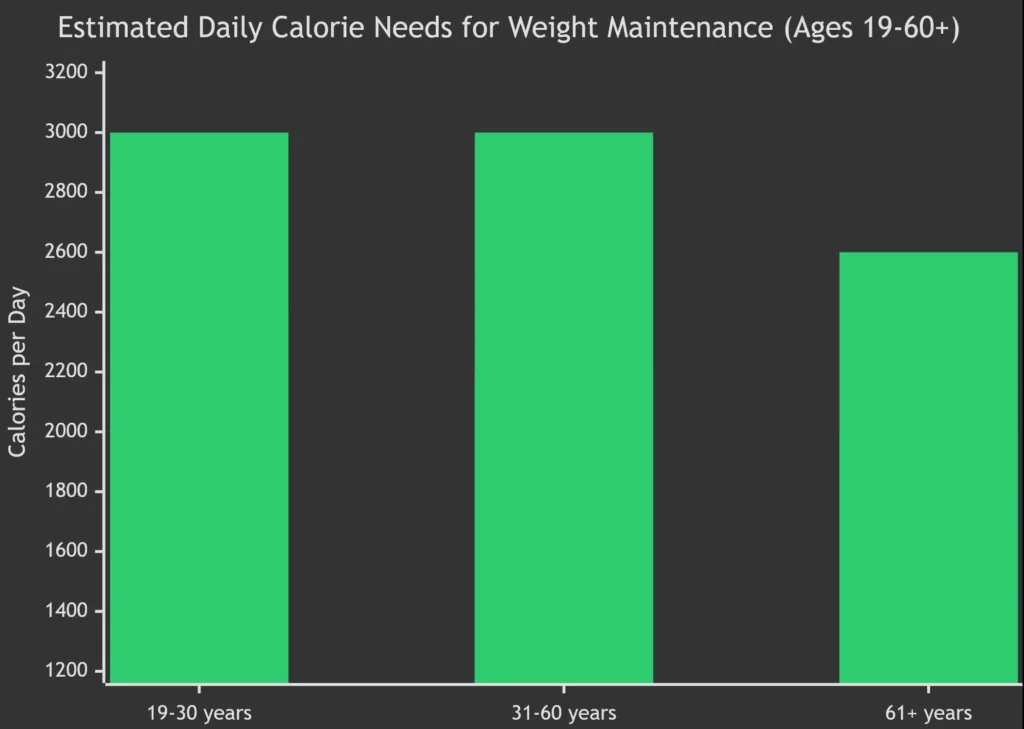
*Source: 2020-2025 Dietary Guidelines for Americans*
Sources:
- Trexler, E. T., Smith-Ryan, A. E., & Norton, L. E. (2014). Metabolic adaptation to weight loss: implications for the athlete. Journal of the International Society of Sports Nutrition, 11(1), 7.
- U.S. Department of Agriculture and U.S. Department of Health and Human Services. *Dietary Guidelines for Americans, 2020-2025.* 9th Edition. (2020).
- Harvard T.H. Chan School of Public Health. (2023). Diet Review: DNA Diets. The Nutrition Source.
- American Academy of Pediatrics. (2021). How to Safely Help Your Teen Lose Weight. HealthyChildren.org.
Disclaimer: This information is for educational purposes only and is not a substitute for professional medical advice. Always consult with a healthcare provider or registered dietitian before making significant changes to your diet, especially if you have underlying health conditions.
What Are Calories, Really?
Simply put, a calorie is a unit of energy. In nutritional terms, calories measure the energy that food and beverages provide to our bodies. Your body uses this energy to power everything from basic cellular functions and breathing to intense physical activity.
This leads us to the “calories in, calories out” model:
- To lose weight, you need to eat fewer calories than your body burns (a calorie deficit).
- To gain weight, you need to eat more calories than your body burns (a calorie surplus).
- To maintain weight, the calories you consume and expend should be roughly equal.
While this concept is scientifically sound, it’s important to acknowledge that it’s a simplification. Many other factors can influence your body’s ability to lose or gain weight, making it more complex than a simple math equation. These factors include:
- Hormonal changes (e.g., thyroid issues, menopause, insulin resistance)
- Genetics
- Medications
- Gut microbiome
- Sleep quality and stress levels
- The thermic effect of food (calories burned during digestion)
Therefore, while creating a calorie deficit is essential for weight loss, the quality of the calories you consume and your overall health status play a critical role in how you feel and your long-term success.
5 Evidence-Based Strategies to Reduce Your Calorie Intake
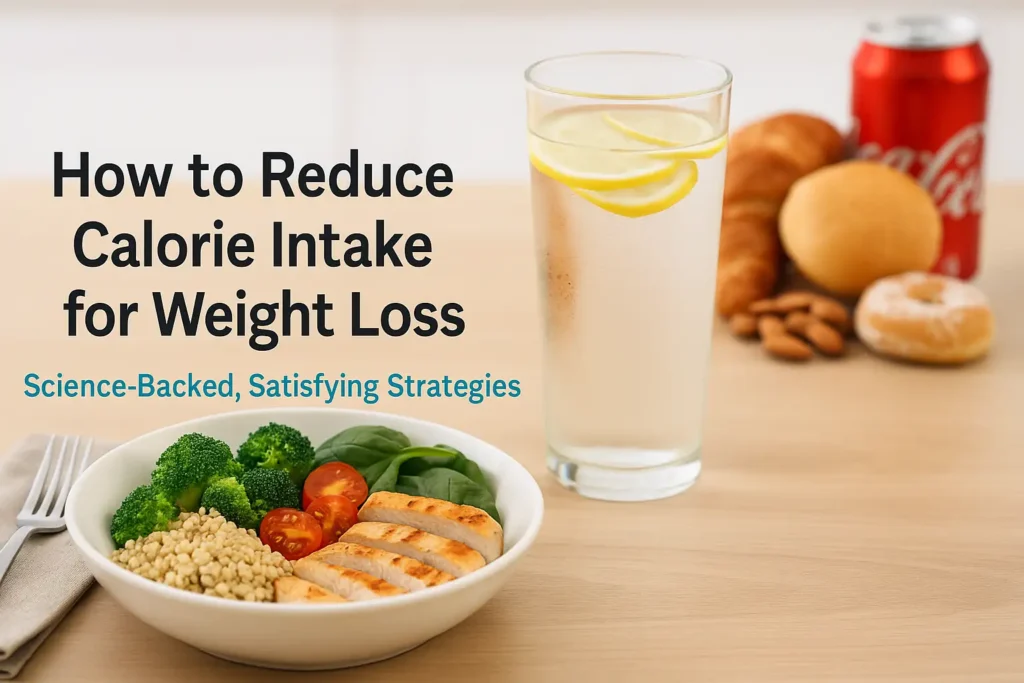
Simply cutting calories without considering what you’re eating is an unsustainable and often unhealthy approach. The following strategies focus on making strategic dietary shifts that naturally help you consume fewer calories while feeling more satisfied and nourished.
1. Prioritize Protein Intake
When it comes to losing weight, protein is a powerhouse nutrient. Studies show that increasing your protein intake can significantly enhance feelings of fullness (satiety) and reduce hunger more effectively than fats or carbohydrates. A 2020 study published in the Journal of Obesity & Metabolic Syndrome highlighted that high-protein diets are effective for reducing body fat and preserving muscle mass.
How to do it: Include a source of lean protein in every meal. Excellent options include chicken breast, fish, eggs, Greek yogurt, tofu, lentils, beans, and nuts.
2. Limit Sugar-Sweetened Beverages
Liquid calories are a major pitfall for many people. Your brain doesn’t register calories from drinks the same way it does from solid food, meaning they don’t trigger the same feelings of fullness. Research has associated the frequent consumption of sugary drinks like soda, sweetened coffee, and fruit juices with an increased risk of weight gain and obesity.
How to do it: Replace sugary drinks with water, sparkling water, or unsweetened tea and coffee. This single change can effortlessly remove hundreds of empty calories from your day.
3. Drink More Water, Especially Before Meals
Staying hydrated is crucial for overall health, but it can also be a powerful tool for weight management. Some studies suggest that drinking water, particularly 30 minutes before a meal, can help reduce hunger and lead to a natural reduction in calorie intake during that meal.
How to do it: Carry a water bottle with you and sip throughout the day. Make it a habit to drink a full glass of water before each meal.
4. Incorporate Regular Exercise
While diet has the most significant impact on calorie intake, exercise is essential for creating a deficit and optimizing health. A combination is ideal:
- Resistance Training (weight lifting, bodyweight exercises): Helps build and maintain muscle mass. Since muscle is metabolically active, having more muscle can slightly increase the number of calories your body burns at rest.
- Cardio (walking, swimming, jogging): Burns calories directly and is excellent for heart health.
Furthermore, exercise offers benefits far beyond weight loss, including improved mental health, increased energy levels, and a reduced risk of chronic disease.
5. Reduce Refined Carbs and Ultra-Processed Foods
Refined carbohydrates, such as white bread, white pasta, pastries, and sugary cereals, have been stripped of their fiber and nutrients. This lack of fiber means they are digested quickly, leading to rapid spikes and crashes in blood sugar that can increase hunger and cravings.
Studies indicate that high-fiber, whole foods promote satiety, while diets high in ultra-processed foods are linked to overeating. A study in Cell Metabolism found that people consumed significantly more calories when allowed to eat ultra-processed foods ad libitum compared to a minimally processed diet.
How to do it: Swap refined grains for their whole-grain counterparts (e.g., brown rice, quinoa, whole-wheat bread) and focus on eating whole, minimally processed foods.
Supplementary Weight Loss Tips for Long-Term Success
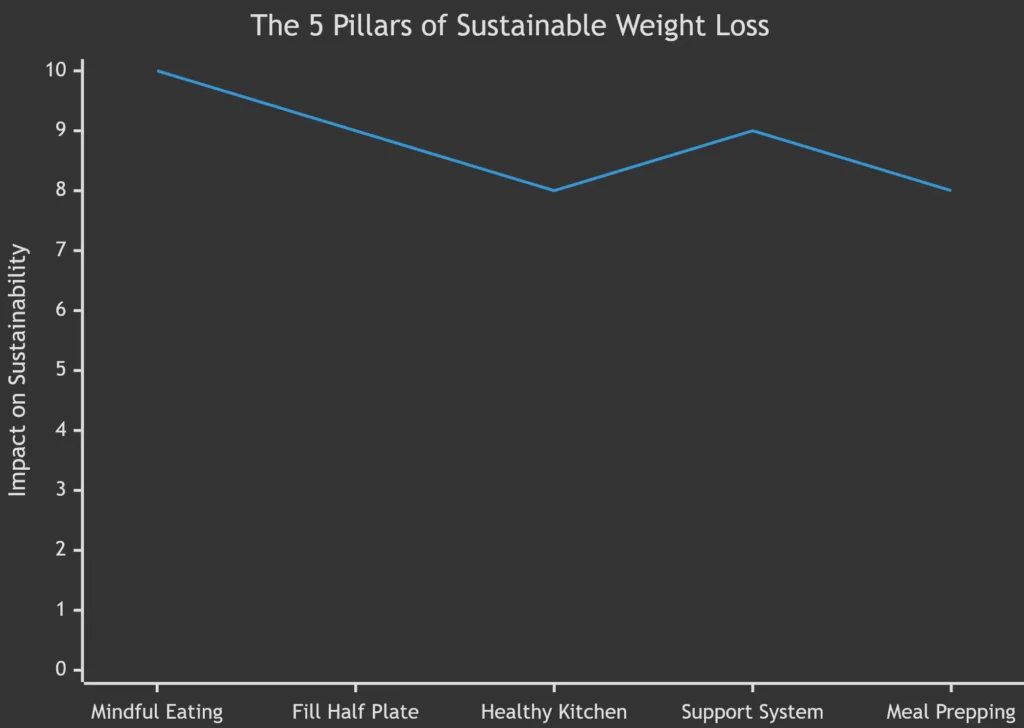
While calculating a calorie deficit provides a mechanical framework for weight loss, long-term success hinges on the behaviors and habits you cultivate. These supplementary strategies shift the focus from short-term restriction to building a resilient, healthy lifestyle that supports your weight goals and overall well-being.
1. Master Mindful Eating
Mindful eating is the practice of bringing full attention to the present moment during a meal, without judgment. It’s the antithesis of distracted eating in front of a screen.
- The Science: A systematic review published in Obesity Reviews concluded that mindful eating interventions are associated with significant reductions in binge eating, emotional eating, and external eating (eating in response to food cues, not hunger) (1). By slowing down and tuning into your body’s signals, you allow time for satiety hormones like leptin to reach your brain, naturally preventing overconsumption.
- How to Practice It:
- Start with a Pause: Before eating, take three deep breaths to transition from your busy day.
- Engage Your Senses: Notice the colors, smells, and textures of your food.
- Chew Thoroughly: Put your fork down between bites. Aim for 20-30 chews per mouthful.
- Listen to Your Body: Periodically check in with your hunger and fullness levels on a scale of 1 (ravenous) to 10 (painfully full). Aim to start eating at a 3 or 4 and stop at a 6 or 7.
2. Prioritize Plants: Fill Half Your Plate with Fruits & Vegetables
This classic advice is rooted in solid nutritional science. Fruits and non-starchy vegetables are low in energy density (calories per gram) but high in volume, water, and fiber.
- The Science: Fiber slows digestion, promotes satiety, and stabilizes blood sugar, which curbs cravings. Research from The American Journal of Clinical Nutrition shows that increasing dietary fiber intake is independently associated with successful weight loss maintenance (2). The high water content in fruits and vegetables also adds volume, helping you feel physically full on fewer calories.
- How to Implement It:
- The “Half-Plate” Rule: Make it a non-negotiable standard for lunch and dinner.
- Incorporate Them Early: Add vegetables to your omelet at breakfast or have a piece of fruit with your morning snack.
- Experiment with Variety: Roasting, grilling, or air-frying can bring out natural sweetness and make vegetables more appealing.
3. Engineer Your Environment: Stock a Healthy Kitchen
Your environment has a profound impact on your choices. Willpower is a finite resource; a well-stocked kitchen ensures that when it’s depleted, the easiest choices are also the healthy ones.
- The Science: The field of behavioral economics consistently shows that we are more likely to consume foods that are visible and easily accessible. A study in Environment and Behavior found that individuals with a bowl of fruit visibly displayed in their home weighed less than those who didn’t (3).
- How to Optimize Your Kitchen:
- Make Healthy Foods Visible: Place washed fruit in a bowl on the counter. Keep pre-cut vegetables at eye-level in the refrigerator.
- Restructure Your Pantry: Store unhealthy, processed snacks in opaque containers or in a hard-to-reach cupboard.
- Meal Prep Components: Cook a large batch of quinoa, grill chicken breasts, or wash and chop vegetables so healthy assembly is quick and easy.
4. Build Your Support System
Weight loss can be a challenging journey, and attempting it in isolation is often less effective. A strong support system provides accountability, encouragement, and shared experience.
- The Science: A landmark study from the University of Pennsylvania found that participants who embarked on a weight loss program with friends were significantly more successful at maintaining their weight loss over time compared to those who did it alone (4). Support can buffer stress and provide motivation during periods of low willpower.
- How to Find Support:
- Enlist a “Fitness Friend”: Find a friend or family member with similar goals for regular check-ins.
- Join a Community: Look for online forums, social media groups, or local clubs focused on healthy living.
- Consider Professional Help: A registered dietitian or a certified health coach provides expert, personalized support and accountability.
5. Embrace Strategic Meal Prepping
Meal prepping is the practice of planning and preparing meals or meal components in advance. It is one of the most powerful tools for maintaining dietary control during a busy week.
- The Science: Decision fatigue is a real phenomenon. After a long day of making choices, the mental energy required to decide what to eat for dinner is low, often leading to less healthy, convenience-based choices. A study in the International Journal of Behavioral Nutrition and Physical Activity linked meal planning to a greater variety of diet and better adherence to nutritional guidelines (5).
- How to Start Meal Prepping:
- Start Small: Don’t feel you need to prep every meal. Start with lunches or healthy snacks for the week.
- Schedule It: Block out 2-3 hours on a weekend day as your “weekly food prep” appointment.
- Keep it Simple: Focus on preparing components—a grain, a protein, and chopped vegetables—that you can mix and match throughout the week.
Potential Downsides of Counting Calories
While tracking calories can be an effective awareness tool for many, it’s not without its risks and limitations.
- Can Promote an Unhealthy Relationship with Food: For some, it can lead to obsessive behaviors, anxiety around food, and an increased risk of developing disordered eating patterns.
- Neglects Nutritional Quality: A diet of 1,500 calories from processed foods is not the same as 1,500 calories from whole, nutrient-dense foods. The latter will support your health, energy levels, and satiety far better.
- Metabolic Slowdown: Drastically cutting calories for a prolonged period can cause your body to adapt by slowing down your metabolism in an effort to conserve energy, making long-term weight maintenance more difficult.
- Risk of Nutrient Deficiencies: Overly restrictive diets can make it challenging to meet your needs for essential vitamins, minerals, and fiber.
Instead of focusing solely on calories, prioritize a balanced diet rich in a variety of nutritious foods. Use calorie counting as a temporary tool for awareness, not as a lifelong prison.
Frequently Asked Questions (FAQ)
Is 1,200 calories enough for a day?
For most adults, 1,200 calories is considered very low and is unlikely to provide sufficient energy or nutrients for long-term health. While it may lead to rapid short-term weight loss, it is difficult to sustain and can lead to the negative side effects discussed above, including muscle loss, nutrient deficiencies, and metabolic adaptation. It is best to aim for a more moderate deficit.
How many calories should I eat for breakfast, lunch, or dinner?
There is no one-size-fits-all distribution. Some people prefer a large breakfast and a lighter dinner, while others do the opposite. A common approach is to aim for a relatively even distribution (e.g., 30% breakfast, 40% lunch, 30% dinner), but this should be tailored to your personal schedule, hunger levels, and preferences. The most important factor is your total daily intake.
How many calories should you eat to gain muscle?
To build muscle, you generally need to be in a slight calorie surplus (consuming 100-300 calories above your maintenance needs), coupled with a consistent resistance training program. This provides the extra energy and building blocks required for muscle protein synthesis. Consulting a sports dietitian can help you develop a precise plan.
How many calories should I eat to lose 5 pounds a week?
Losing 5 pounds per week is not recommended by health experts like the Centers for Disease Control and Prevention (CDC). Such rapid weight loss is primarily from water weight and muscle loss, not just fat, and is unsustainable. It can also lead to gallstones, electrolyte imbalances, and severe fatigue. The CDC recommends a slow, steady weight loss of 1-2 pounds per week, which is far more manageable and allows you to preserve muscle mass.
The Final Takeaway :”Calories Per Day to Lose Weight”
Determining how many calories you should eat per day to lose weight depends on a personalized calculation based on your age, sex, height, current weight, activity level, and health goals. While the general principle involves creating a sustainable calorie deficit, the most successful approach goes beyond mere numbers.
Focus on building a diet rich in whole foods—lean proteins, fruits, vegetables, and whole grains—while incorporating regular physical activity. Use online calculators or tracking apps for a few days to understand your baseline, but don’t become a slave to them. For the most personalized and effective plan, consider working with a registered dietitian (RD) who can help you navigate your weight loss journey safely and successfully, ensuring you meet your nutritional needs while achieving your goals.
Medical Disclaimer
Last Updated: 29/11/2025
The information provided in this blog post, “How Many Calories Should You Eat Per Day to Lose Weight?”, is for educational and informational purposes only. It is intended to serve as a general guide and is based on current scientific evidence and public health guidelines, such as those from the 2020-2025 Dietary Guidelines for Americans.
1. Not a Substitute for Professional Medical Advice
This content is not a substitute for professional medical advice, diagnosis, or treatment. The information presented, including text, graphics, images, and other material, is not intended to and does not constitute medical or healthcare advice.
2. Consult a Qualified Healthcare Provider
You should always consult with a qualified healthcare professional, such as a physician or a registered dietitian, before making any significant changes to your diet, exercise routine, or lifestyle, especially if you are seeking to lose weight. This is critically important if you:
- Have any known or suspected medical condition, including but not limited to diabetes, heart disease, thyroid disorders, or kidney disease.
- Are pregnant, nursing, or trying to conceive.
- Have a history of eating disorders.
- Are taking any prescription medications.
- Are under the age of 18 or over the age of 65.
3. Individual Results May Vary
Individual nutritional needs and health outcomes are highly variable and depend on factors such as your age, sex, health status, genetics, metabolism, and activity level. The calorie ranges and strategies mentioned in this article are general estimates and may not be appropriate for you. Do not rely on information on this site in place of seeking professional medical advice.
4. Assumption of Risk
Any action you take upon the information in this article is strictly at your own risk. You should not disregard professional medical advice or delay in seeking it because of something you have read here. The author and publisher are not responsible for any errors or omissions, and are not liable for any losses, injuries, or damages from the display or use of this information.
By reading and using the information on this site, you acknowledge and agree to the terms of this medical disclaimer.
About the author
Max Wild is a health writer and researcher focused on cancer awareness, prevention, and patient education. He translates complex medical topics into simple, practical guidance so readers can have more informed conversations with their doctors.